Remote Anchorage Dental Implants: Zygomatic & Advanced All-on-X Solutions for Severe Upper Jaw Bone Loss
Patients with advanced bone loss in the upper jaw can benefit from remote anchorage dental implants, even if they have been told that traditional dental implants are not an option. This severe upper jaw bone loss is often referred to as an atrophic maxilla, which presents significant challenges for traditional implant placement due to insufficient bone volume. Fortunately, advances in oral and maxillofacial surgery now allow many of these patients to receive fixed, long-term implant restorations without bone grafting, specifically without the need for extensive bone grafting procedures. Remote anchorage dental implants offer a life-changing solution for those previously unable to receive fixed teeth due to bone loss.
Remote dental anchorage—including zygomatic, pterygoid, and transnasal implants—makes it possible to achieve stable All-on-X full-arch dental implant solutions, even in cases of severe maxillary atrophy. All-on-Four® dental implants can restore a full set of failing teeth in one day, while All-on-X dental implants allow for the replacement of an entire arch of teeth using just four to six strategically placed implants. Both All-on-4® and All-on-X procedures provide immediate function and immediate loading, so patients can use their new teeth right away. These immediate results allow patients to eat and smile confidently soon after surgery.
At Texas Oral Surgery Specialists in Fort Worth, TX, these complex procedures are performed by Dr. Chris Tye, an experienced oral and maxillofacial surgeon with extensive clinical expertise in advanced implant reconstruction. Through meticulous planning, CBCT-guided imaging, and evidence-based surgical protocols, patients can regain function, aesthetics, and confidence—often faster and more predictably than with graft-dependent approaches. Patients leave the office with a fixed temporary prosthesis (temporary bridge) on the same day, or sometimes the day after, as their All-on-4® or All-on-X procedure, enjoying immediate results and the ability to eat and smile confidently right after surgery. A final fixed prosthesis is delivered four to six months later, after initial healing.
What Is Remote Dental Anchorage?
Remote anchorage Dental Implants are designed for patients with severe bone loss in the upper jaw, using advanced implant techniques when the upper jaw lacks sufficient bone volume or density to support conventional dental implants. Instead of relying on compromised maxillary bone, remote anchorage implants are anchored into dense, anatomically stable craniofacial structures, such as:
- The zygoma (cheekbone)
- The pterygoid plate (posterior maxilla). Pterygoid implants are anchored at a 45-degree angle into the medial pterygoid plate.
- The transnasal region (nasal floor support)
These techniques are specifically designed to maximize contact with available dense bone, often utilizing tilted implants to achieve optimal stability and avoid bone grafting. Titanium implants are commonly used for their stability, longevity, and biocompatibility, supporting osseointegration and long-term success. These dense bony structures provide the stability required for immediate-load and delayed-load All-on-X restorations, allowing patients with severe bone loss to receive fixed teeth without extensive grafting procedures.
Why Is Remote Dental Anchorage Used?
Bone loss in the upper jaw can occur due to:
- Long-term tooth loss
- Periodontal disease
- Chronic denture wear
- Sinus expansion (pneumatization)
- Trauma, infection, or prior failed grafting
When considering tooth replacement options, patients may be offered removable dentures or traditional dentures. Removable dentures require daily removal and adhesives, and can lack stability, adequate bite force, and comfort. Traditional dentures may slip or click while speaking or eating, often leading to dissatisfaction. In contrast, implant-based solutions such as remote anchorage dental implants provide a fixed, stable, and more natural-feeling alternative, greatly enhancing comfort, functionality, and quality of life.
In cases of severe bone loss, particularly in the atrophic posterior maxilla, procedures like sinus augmentation and sinus lifts are often required to enable traditional implant placement. In these situations, traditional implants may require multiple surgeries, extended healing periods, and unpredictable outcomes, which can increase both cost and recovery time. However, zygomatic implants are an alternative for extensive upper jaw bone grafting on the atrophic posterior maxilla, often eliminating the need for sinus augmentation or sinus lift procedures. Our expertise in dental implant procedures allows us to offer a range of minimally invasive, effective treatments tailored to each patient’s needs.
Remote anchorage bypasses deficient bone entirely, anchoring implants into dense skeletal structures that provide immediate mechanical stability and long-term success.
This approach allows for:
- Reduced surgical stages
- Shorter overall treatment timelines
- Avoidance of sinus lifts and block grafts
- Improved prosthetic support for full-arch restorations
Bone Grafts and Augmentation vs Remote Anchorage
When there is not significant bone loss, traditional techniques for All-on-Four® utilize two implants placed vertically in the anterior region and two angled implants in the posterior region to maximize bone contact and stability, potentially eliminating the need for bone grafting.
When there is not enough bone in the upper jaw for traditional All-on-X, Bone grafting and bone augmentation are required. When teeth are missing for an extended period or when gum disease has damaged the bone, there may not be enough bone structure to support traditional dental implants. In these cases, bone grafting is performed to rebuild and strengthen the jaw, creating a stable foundation for successful future implant placement. Patients seeking dental implants must go through multiple appointments, including consultation and possible bone grafting if there is bone loss.
During bone grafting, natural or synthetic bone material is added to areas of deficiency, encouraging new bone growth and restoring the volume needed for implants. This process is often necessary for patients who have lost bone due to tooth loss, advanced gum disease, or trauma. By augmenting the bone, oral surgeons can help ensure that traditional dental implants have the support they need to function like natural teeth.
However, bone grafting can involve multiple procedures and a lengthy healing period before dental implants can be placed. For patients with severe bone loss or those seeking to avoid extensive bone grafting, advanced solutions like zygomatic implants and remote dental anchorage offer a way to restore missing teeth without the need for traditional bone augmentation. These innovative techniques allow for dental implant placement even when the upper jaw lacks sufficient bone, providing a permanent solution for many patients who were previously told they were not candidates for implants. With remote anchorage, prosthetic teeth are securely attached to the implants, offering long-term durability, natural appearance, and restored dental function. After healing, patients receive their replacement teeth, which are custom-made to look and feel like natural teeth, completing the restoration process.
Types of Remote Dental Anchorage Implants
In many advanced cases, remote anchorage implants are strategically combined with conventional implants to optimize load distribution and prosthetic design. These treatments are often part of a comprehensive full-mouth rehabilitation, especially for patients with severe bone loss. In situations of severe maxillary atrophy, four zygomatic implants, also known as quad zygomataics, may be used to support a fixed prosthesis, providing stability even when bone is insufficient for traditional implants. Full-arch restoration can often be achieved with just four implants, making the procedure more efficient and requiring fewer surgeries compared to traditional methods. All-on-4 and All-on-X implants are anchored in the jawbone, providing a stable and secure foundation for prosthetic teeth.
Pterygoid Implants or Transnasal implants can also be used to provide additional support in the posterior or anterior region of the maxilla, respectively.
Pterygoid Implants
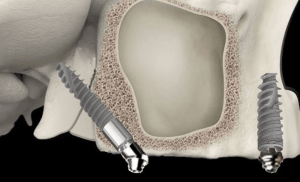
Pterygoid implants are placed in dense bone at the back of the upper jaw, in the second molar region behind the maxillary sinus.
Clinical advantages include:
- Elimination of posterior sinus grafting
- Excellent posterior anchorage for All-on-X restorations
- Reduced cantilever forces
- Faster rehabilitation
Pterygoid implants are particularly effective for patients with posterior maxillary bone loss or maxillary sinus enlargement.
Zygomatic Implants
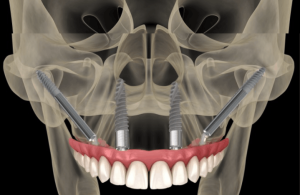
Zygomatic implants are long implants anchored into the zygomatic bone (cheekbone), one of the densest bones of the facial skeleton, providing exceptional stability for maxillary reconstruction.
Benefits include:
- Exceptional primary stability
- Ideal for severe or extreme maxillary atrophy
- Immediate-load capability in many cases, allows a fixed bridge to be placed right after surgery for rapid restoration of function
- Elimination of extensive bone grafting
- High long-term success rate, with a cumulative survival rate of 96% after 12 years, and minimal complications reported in long-term studies
Zygomatic implants are often the treatment of choice for patients who have been told they are not candidates for dental implants due to bone loss.
Transnasal Implants
Transnasal implants engage dense bone along the nasal floor and are used to enhance anterior support in complex maxillary reconstructions.
This technique:
- Improves overall implant distribution
- Complements zygomatic and pterygoid anchorage
- Provides additional stability for full-arch prostheses
Initial Consultation and Evaluation
The journey to a restored smile with dental implants begins with a comprehensive initial consultation and evaluation. This crucial first step is especially important for patients with missing teeth, severe bone loss, or those who have been told they are not candidates for traditional dental implants. During your visit, the oral surgeon will thoroughly assess your overall oral health, examining your gums, any remaining natural teeth, and the underlying bone structure to determine the best approach for your unique needs.
Advanced imaging technology, such as CBCT or CT scans, is used to create detailed 3D images of your jaw, allowing the surgeon to evaluate the maxillary sinus, zygomatic bone, and any areas of bone loss. This precise visualization helps identify whether bone grafting or extensive bone grafting procedures might be necessary, or if you may benefit from alternative solutions like zygomatic implants or pterygoid implants. The goal is to ensure there is enough bone to support secure implant placement and to avoid unnecessary procedures whenever possible.
Your medical history will also be reviewed, including any conditions such as gum disease that could impact the success of your dental implant procedure. The oral surgeon will discuss your expectations, desired outcomes, and the treatment process, including options like the all-on-x procedure, which can restore an entire upper or lower jaw with just four dental implants supporting a fixed bridge. Whether you are considering implants for the entire upper arch or replacing multiple teeth, the initial consultation is the perfect time to explore all available options in implant dentistry.
Comfort and safety are top priorities, so anesthesia options such as IV conscious sedation or local anesthesia will be explained to help you feel at ease during implant surgery. You’ll also learn about the initial healing period, proper care for your new teeth, and what to expect as you transition to your final restoration.
Most importantly, the initial consultation is your opportunity to ask questions and address any concerns about the treatment process, from implant placement to long-term maintenance. By working closely with your oral surgeon, you can develop a personalized plan that supports your overall oral health and delivers a stable, natural-looking smile—even in cases of severe bone loss or damaged teeth. For patients in Fort Worth, TX, this thorough evaluation ensures you are a good candidate for advanced solutions like zygomatic or pterygoid implants, setting the stage for a successful outcome and renewed confidence.
Benefits of Remote Dental Anchorage for All-on-X Patients
No Bone Grafting Required
Remote anchorage utilizes existing dense bone, avoiding months of graft healing and additional surgeries.
Faster Time to Fixed Teeth
Many patients receive provisional fixed teeth the same day or shortly after surgery.
Long-Term Stability
Anchoring implants in dense craniofacial bone improves long-term success and prosthetic durability.
Improved Quality of Life
Patients regain the ability to eat, speak, and smile confidently with a stable, fixed solution. All-on-X dental implants also help preserve or improve facial structure by maintaining bone density and supporting the natural contours of the face.
Who Is a Candidate for Remote Dental Anchorage?
You may be a candidate if you:
- Have been told you lack adequate bone for dental implants
- Wear upper dentures and want a fixed alternative
- Have failed previous bone grafts
- Desire a graft-free All-on-X solution
Most patients are good candidates for remote anchorage dental implants due to the minimally invasive nature of the procedure.
Candidacy is determined through a comprehensive evaluation, including CBCT imaging, medical review, and prosthetic planning.
Recovery and Aftercare
Following remote anchorage or zygomatic implant surgery, patients may experience temporary swelling, bruising, or discomfort. These symptoms are expected and typically well managed with prescribed or over-the-counter medications.
Post-operative care includes:
- Soft-food diet during early healing
- Avoidance of excessive chewing forces
- Strict oral hygiene protocols
- Scheduled follow-up visits with radiographic monitoring
While complications are uncommon, close follow-up allows for early identification of sinus-related or neurologic symptoms and ensures optimal long-term outcomes.
Is Remote Dental Anchorage Right for You?
If you have been told implants are not possible—or want a predictable, graft-free solution for missing upper teeth—remote dental anchorage may be the answer.
How to Schedule a Consultation
📍 Texas Oral Surgery Specialists – Fort Worth, TX
📞 (817) 552-3223
Schedule a consultation to explore advanced All-on-X solutions designed for complex cases.
Author: Dr. Chris Tye, Oral and Maxillofacial Surgeon
Dr. Chris Tye is an oral and maxillofacial surgeon at Texas Oral Surgery Specialists in Colleyville, Texas. His clinical focus includes advanced dental implant reconstruction, including remote dental anchorage techniques such as zygomatic, pterygoid, and transnasal implants for patients with severe maxillary bone loss. Dr. Tye emphasizes CBCT-based diagnosis, anatomic risk assessment, and coordinated treatment planning to support predictable surgical outcomes and long-term function.
Medical Dental content on this page is authored and/or reviewed by an oral and maxillofacial surgeon and is provided for educational purposes only. It does not replace professional diagnosis or individualized treatment planning. Consult a qualified oral surgeon for care specific to your condition.